
Our involvement with our Central American colleagues began in Guatemala in the late 70′s. While touring the Mayan pyramids and investigating the surviving artifacts of the lost Maya civilization, we met then President of Guatemala, Carlos Osorio Arana, who invited us to his home. It was during that visit President Arana asked, “You are a heart surgeon. Tell me, why don’t we have heart surgery in Guatemala?” The answer was short: “Give us two years and your best surgeon and you will have heart surgery.”
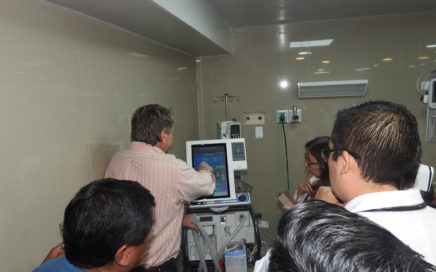
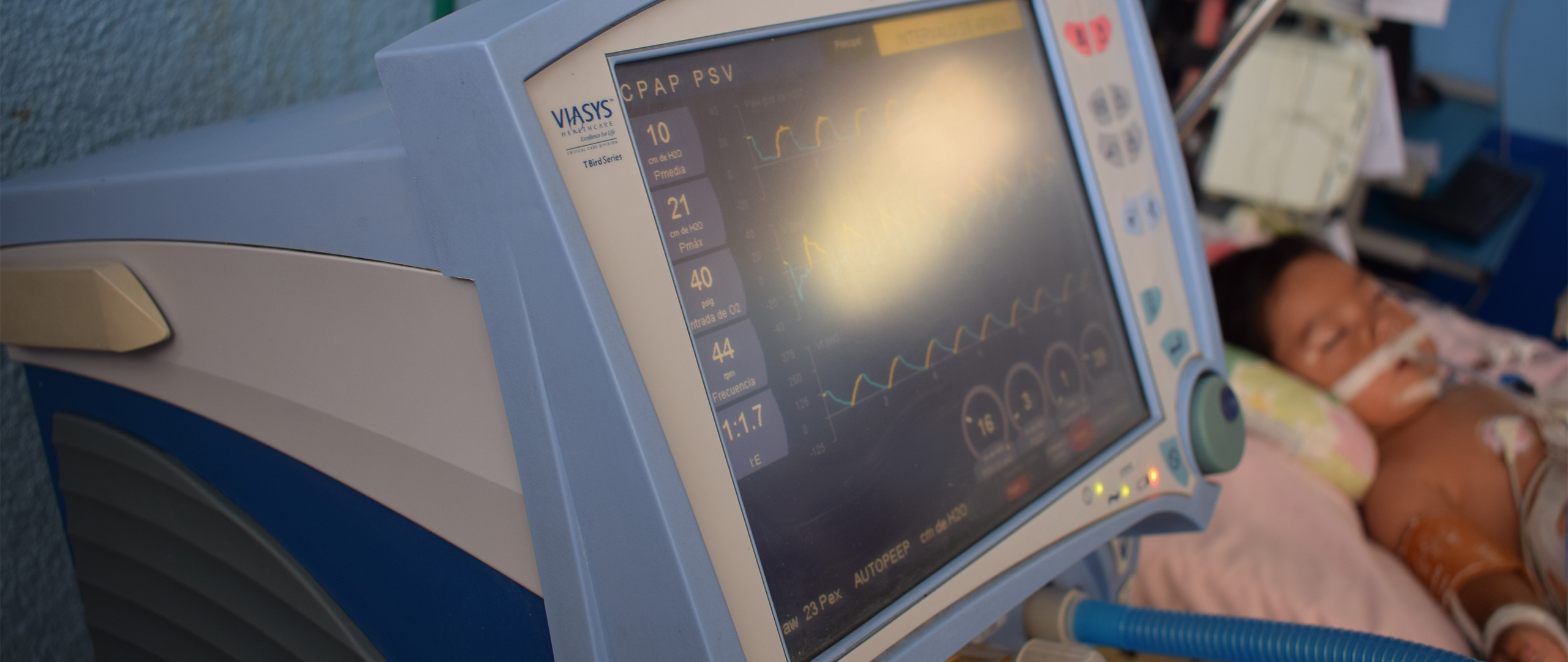
This is how our long lasting friendship and cooperation with Dr. Raul Cruz Molina began. Dr. Cruz, who had his general surgical training in Dallas, Texas, spent two years of additional training at Carolinas Medical Center, at that time known as Charlotte Memorial Hospital. He participated in all aspects of cardiac surgery. Simultaneously we trained nurses of various disciplines, anesthesiologists and cardiologists who spent time periods of one to three months in Charlotte and were provided with experience necessary to fulfill the requirements for a fully staffed heart surgery program. After all preparations were completed and we delivered all the hardware needed for cardiac surgery such as a heart lung machine, respirators, and monitors, there was still a remaining stumbling block: The lack of diagnostic facilities. This was solved again by the President. He ordered every three months a Guatemalan Air Force transport plane to land at Charlotte Douglas Airport, disgorge 30-40 patients, most of them children, who had prior screening by the Guatemalan cardiologists and judged to be candidates for heart surgery. On arrival, they were taken straight to Carolinas Medical Center where they underwent heart catheterizations performed by Dr. Norris Harbold, our senior cardiologist, who worked around the clock. Forty-eight hours later the patients were returned to Guatemala City, ready for heart surgery.
The unusual situation of the patients being “worked-up” in Charlotte, allowed us to proceed with heart surgery in Guatemala City even before we installed the heart catheterization laboratory. Our cooperation with Dr. Cruz and his colleagues consisted of providing instruments and training his staff. Dr. Cruz had an extremely difficult task of establishing a heart surgical program at the Roosevelt Hospital, a general hospital in Guatemala City which at that time was known to have more patients than beds.
During the following years, we sent teams of surgeons, anesthesiologists, nurses and pump technicians regularly to Guatemala while our Guatemalan counterparts spent various time periods in Charlotte. As time passed, the number of participants on our outreach team became smaller and smaller. When the Guatemalan’s were ready to “fly-on-their-own” the number of our team visits gradually decreased and eventually stopped. Our contact and friendship with our Guatemalan colleagues, however, never came to a halt. They regularly spent time at Carolinas Medical Center, we accepted difficult and complex cases from them, and provided grants for Guatemalan surgeons to attend scientific meetings in the United States.
It is notable that although we gave a measurable amount of support, we never performed ourselves heart surgery in Guatemala: We only assisted allowing our Guatemalan colleagues to be the pioneers of their own profession in their own land. As a result of their quick learning and dedicated hard work, Dr. Cruz was able to establish the facility known today as UNICAR, the Guatemalan Institute of Cardiology and Cardiac Surgery. Our contribution to his work was recognized by the Guatemalan government by awarding our team the country’s highest civilian decoration, the “Commendador of Order de Quetzal”.
As the years passed, two very important events occurred in Guatemalan heart surgery: Dr. Aldo Castaneda, Director of the Boston Children’s Hospital, world renowned pediatric cardiac surgeon and a Guatemalan himself, moved back to his home country. In concert with Dr. Cruz they established a pediatric surgical program, which is not only unparalleled in the region, but stands up to the highest standards of pediatric cardiac surgery worldwide. The second very important event was the homecoming of Dr. Rafael Espada, now the country’s Vice President. Dr. Espada was already a successful practicing cardiac surgeon in Houston, Texas. Heeding the call of his country, he gave up his career in the United States and returned to Guatemala City bringing up-to-date techniques and technologies to UNICAR.
With the continued success of UNICAR, several other cardiologists and surgeons who left their native country because of lack of facilities, also returned home and joined UNICAR’s extended faculty. Now UNICAR has its own training program in cardiac surgery and cardiology, and most of the faculty is “homegrown” cardiac specialists.
Our most recent project with UNICAR was completed in January 2009 when we transferred a fully self-contained cardiac diagnostic laboratory to Guatemala City, obtained with grants and support from the Heineman Foundation for Research, Educational, Charitable and Scientific Purposes, Inc. and The Anabella Paiz, the wife of our Guatemalan Board member and staunch supporter of our Central American projects, Fernando Paiz contains a complete heart catheterization laboratory, as well as facilities for electrophysiological testing and echocardiography. This allows UNICAR to extend services to the indigent Native American population living in remote areas of Guatemala. This new concept of bringing cardiological services to those who do not have the means to travel to the capital has gained international attention and approval. During the first few months the mobile laboratory was in action, hundreds of patients benefited from its services.
At present, we are engaged in another outreach project with UNICAR: Establishment of a digitized echocardiographic reading, consulting, and record retrieving system.
Echocardiography is a cardiac diagnostic modality, which is based on the old sonar system developed during World War II and used to track German submarines. Today we are tracking heart disease and use echo to diagnose conditions of the heart valves as well as inborn anomalies in children – both rampant in Central America. While the echo-imaging may be performed by technicians with only limited training, the evaluation of the echocardiograms requires advanced know-how of a specially trained cardiologist. Because of this, as well as because of the cost of the equipment, echocardiography in Central America is limited to the largest hospitals. Even these institutions struggle with the problem of storage facilities which make the retrieval of echocardiograms difficult, if not impossible.
We have been presented with the rare opportunity to remedy this situation. Carolinas Medical Center (CMC), the flagship of the Carolinas HealthCare System (CHS), has outgrown its Siemens KinetDx 3.00 PACS system suitable to transfer and store echocardiographic imaging. While the equipment is fully functional, its capacity is now too small to satisfy the needs of the CHS cardiology service. The same equipment could easily cover the needs of UNICAR. The digitized equipment which has been donated by CMC can be installed easily into UNICAR, then connect to peripheral Guatemalan hospitals as well as to CMC. It will allow storage and retrieval of echo-studies, and more importantly it would create a digital network suitable to transfer echo-studies taken by technicians for reading by cardiologists at UNICAR. It would also make immediate consultation between the cardiologists in Guatemala City and Charlotte feasible. This exciting project is now under development and it is our hope to have it completed very early 2010.